Limits & verification
Bitcoin ATM limits and ID checks in Nevada
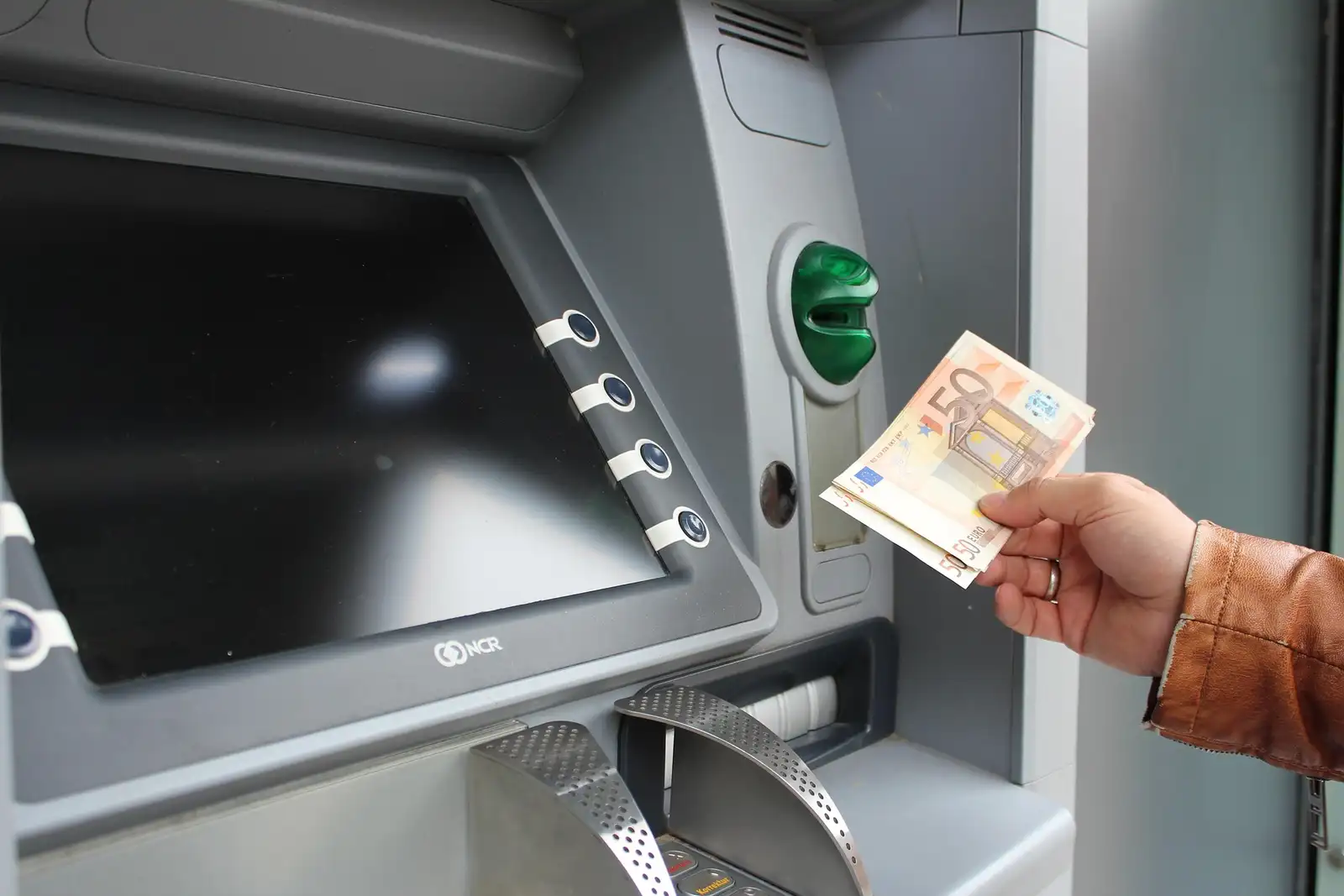
Crypto kiosks run a tiered system: a phone number gets you a few hundred dollars, a government ID gets you thousands, and the top tier at some Las Vegas machines reaches $25,000 a day. Here is how the tiers work, why they exist, and where Nevada differs from states that legislated caps.
How kiosk verification tiers work
Every operator running machines in Nevada uses some version of a three-step ladder. The labels differ, the thresholds differ, but the structure is remarkably consistent because it is shaped by the same federal obligations.
Tier one — phone only. You enter a mobile number, receive an SMS code, and enter it. No photo ID. This tier typically covers a few hundred to around two thousand dollars depending on the operator, and it exists because the compliance burden for very small transactions is proportionately lower. Some Coinhub machines in Las Vegas advertise purchases up to around $2,000 on a phone number alone.
Tier two — government ID. You scan a driver's licence, state ID or passport. The machine reads the barcode and often photographs the document. This unlocks the operator's standard daily ceiling, commonly somewhere between $3,000 and $10,000.
Tier three — enhanced verification. A live selfie matched against the ID, sometimes a proof of address, occasionally a source-of-funds question for very large amounts. This is where the headline ceilings live — Coinhub's advertised $25,000 daily limit at certain Las Vegas locations sits here.
Typical limits at Nevada machines
| Tier | What you provide | Typical daily buy cap | Time to complete |
|---|---|---|---|
| Entry | Mobile number + SMS code | $500–$2,000 | 1–2 minutes |
| Standard | Government photo ID scan | $3,000–$10,000 | 3–6 minutes |
| Enhanced | ID + live selfie, sometimes address proof | $10,000–$25,000 | 5–15 minutes |
| Sell (two-way only) | Usually ID at any amount | $500–$3,000 | Plus confirmation wait |
Two things about that table deserve emphasis. First, the enhanced tier's ceiling is marketing as much as capability — a $25,000 machine needs $25,000 of Bitcoin liquidity provisioned and a customer willing to pay roughly $4,000 in fees for the privilege. It happens, but rarely.
Second, the sell row. Two-way machines are a minority of the Nevada fleet, and where they exist their cash-dispensing capacity is limited by how much paper money is physically in the machine. A kiosk that will happily take $10,000 from you may only be able to hand back $800.
If your limit problem is that kiosks are too small A verified exchange account has no comparable ceiling, costs a fraction as much, and produces clean records for your tax return.
Set up an accountSell-side ceilings and why they bite
Selling crypto for cash at a Nevada kiosk runs into three constraints at once: the operator's daily sell limit, the physical cash in the machine, and network confirmation time.
The physical constraint is the one people do not anticipate. A machine in a convenience store on Nellis Boulevard is loaded with a finite amount of currency, and if two people ahead of you cashed out that afternoon, your redemption may simply fail. Some operators let you generate a redemption code and collect later; others do not.
Confirmation time is the second. You send Bitcoin to the machine's address and it waits for network confirmations before dispensing. During periods of network congestion that can take longer than you expect, and if the host business closes in the meantime you are standing outside a locked door with a valid code and no cash.
Our selling guide covers the workarounds and, more usefully, the reasons most Nevadans should sell on an exchange and withdraw dollars to a bank instead.
Why the ID checks exist at all
None of this comes from Nevada. It comes from the federal Bank Secrecy Act and the regulations administered by the Financial Crimes Enforcement Network.
A crypto kiosk operator is a money services business. That designation carries a defined set of obligations: register with FinCEN, maintain a written anti-money-laundering programme, designate a compliance officer, conduct independent testing, run a customer identification programme, monitor for suspicious activity and file suspicious activity reports, and file currency transaction reports on cash transactions above the applicable threshold.
The tiered structure you see at a machine is an operator's practical implementation of those duties, calibrated so that lower-risk small transactions carry less friction. It is also, increasingly, a fraud control — the FBI recorded 13,460 crypto-kiosk fraud complaints in 2025 with $389 million in losses, and identity friction is one of the few tools operators have to slow a scam in progress.
What Nevada law actually says about limits
Less than you might expect. Nevada regulates kiosk operators through money transmitter licensing: the Financial Institutions Division has stated that an entity facilitating the transmission of, or holding, fiat or digital currency by way of a kiosk needs a licence under NRS Chapter 671, with a surety bond starting at $10,000 and scaling to a $250,000 cap.
What Nevada has not done is legislate kiosk-specific consumer protections. A number of other states passed laws in 2024 and 2025 imposing statutory daily transaction caps — often $1,000 for new customers — mandatory on-screen scam warnings, refund rights for fraud victims who report quickly, and ceilings on operator fees. Nevada has debated the idea. Consumer advocates including AARP have pressed for it. As of our latest review, nothing kiosk-specific has passed.
So the limits you encounter in Las Vegas or Reno are entirely the operator's own policy. That has one practical consequence worth knowing: if a machine's limit blocks you, there is no regulator to appeal to, because no rule is being applied. The full picture is on our Nevada Bitcoin ATM regulation page.
Structuring: the thing that turns a legal transaction illegal
This needs stating plainly because people do it without realising it is a crime.
Deliberately breaking a transaction into smaller pieces — across several machines, several days, or several operators — for the purpose of staying below a reporting threshold is called structuring. Under federal law it is an offence in its own right, independent of whether the underlying money is entirely legitimate. You can structure clean money and still be prosecuted for structuring.
Kiosk operators monitor for the pattern. It is one of the clearest signals their transaction monitoring is designed to catch, and it produces a suspicious activity report. If you have a legitimate need to move an amount above a machine's ceiling, the correct answer is a verified exchange account or an OTC desk — not four machines on Boulder Highway in one afternoon.
When limits are the wrong problem to solve
We get a steady stream of questions along the lines of "how do I raise my kiosk limit?" Almost always, the better question is whether a kiosk is the right instrument at all.
Consider the arithmetic. Someone who wants to convert $10,000 of cash and is frustrated by a $3,000 daily cap is contemplating four trips and roughly $1,600 in fees. The same person could deposit the cash at their own bank, transfer it to a licensed exchange, and buy the same Bitcoin for around $40 — with no limit problem at all and a clean transaction record.
Above roughly $50,000 the right answer changes again: an over-the-counter desk will quote a single all-in price and settle the whole amount at once, typically at 0.1% to 0.5%. Our Nevada crypto OTC guide covers minimums and what a desk will need from you.
The only scenario where kiosk limits are genuinely the binding constraint is the cash-in-hand, no-bank-account case. That is a real situation, and for those readers our cash buying guide covers every alternative we have found, including the ones that do not require a traditional bank.
Limits, fees and paperwork all get easier on the other side
A verified account on a licensed platform removes the ceiling problem, cuts the cost by an order of magnitude, and gives you an exportable transaction history for your federal return. The setup is one afternoon.
Partner link. Digital assets are volatile and are not FDIC- or SIPC-insured. Nevada Crypto does not give investment advice.