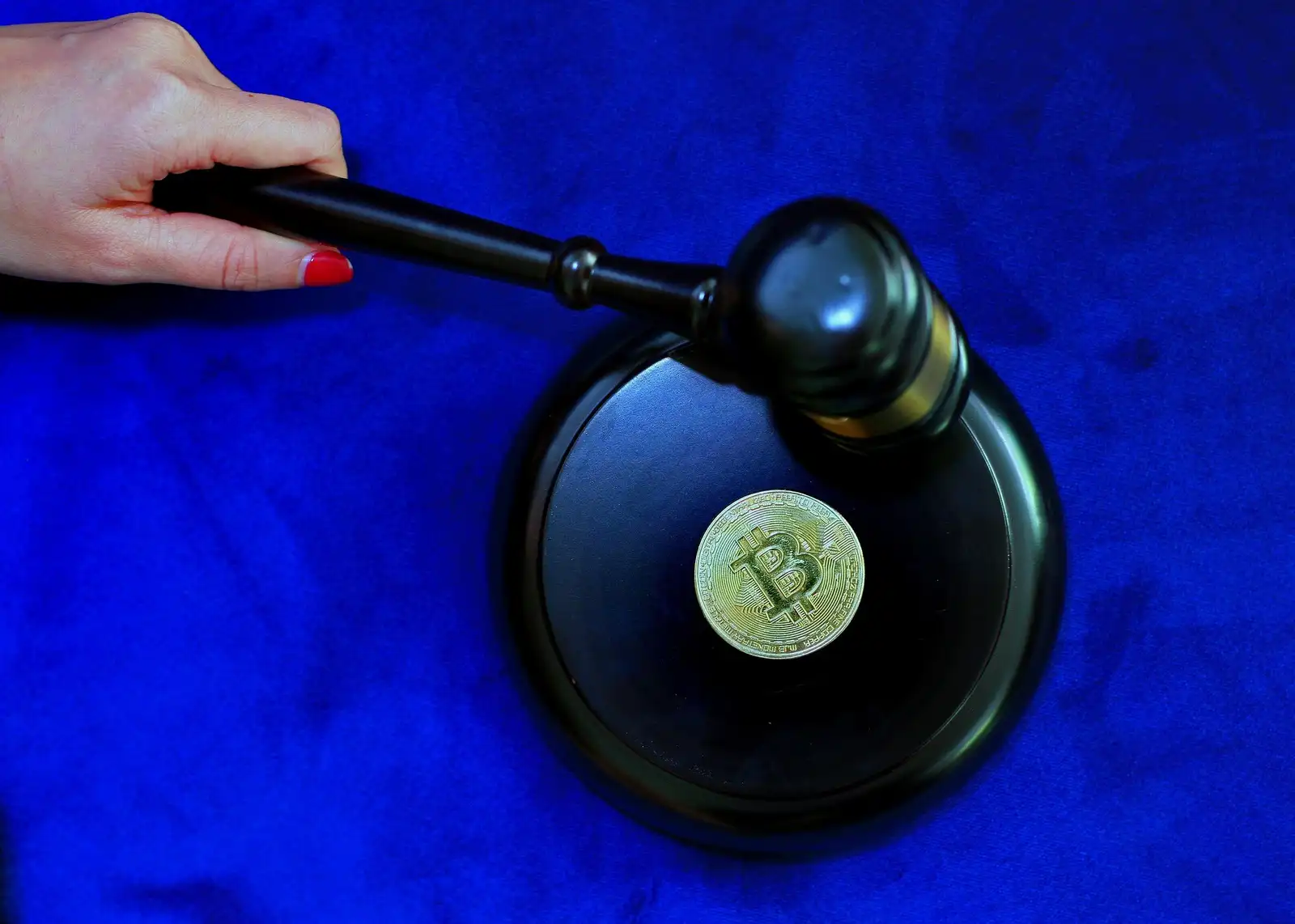
Fraud
Avoiding crypto scams in Nevada
Crypto fraud cost Americans $11.4 billion in 2025 across 181,565 reported complaints, and Nevada is structurally exposed — dense kiosk corridors in cash-heavy neighbourhoods, large retirement communities, a transient population and no state statute requiring refunds. This page is written to be forwarded.
The numbers
In 2025 the FBI's Internet Crime Complaint Center received 181,565 crypto-related complaints reporting $11.4 billion in losses — a 22% increase on the previous year. Crypto kiosk fraud specifically accounted for 13,460 complaints and roughly $389 million, up 58% in losses year on year.
The age distribution is the part that matters most for this state. Adults over 60 reported roughly $257 million in kiosk-related losses across about 6,188 complaints — the largest share of any age group — and across all crypto fraud, over-60s accounted for around $4.4 billion, close to 40% of the national total.
These are reported figures, and the real numbers are higher. A substantial share of victims never report, usually out of embarrassment, sometimes because they do not know where to, and sometimes because a family member handles it quietly.
Why Nevada is structurally exposed
Four factors line up badly here, and they compound.
Kiosk density in cash-heavy corridors. Boulder Highway, Nellis Boulevard, Craig Road and Las Vegas Boulevard North carry some of the densest crypto-kiosk clusters in the western United States, in neighbourhoods with the fewest bank branches. Those are also the places where a victim is least likely to encounter a teller who interrupts the transaction.
Large retirement communities. Sun City Summerlin, Sun City Anthem in Henderson, Sun City Mesquite, Boulder City and the Carson Valley all concentrate exactly the demographic the FBI data identifies as most heavily targeted.
A transient population. Nevada has one of the highest in-migration rates in the country. New arrivals have weaker local support networks, no long-standing branch relationship, and fewer people nearby who would notice something wrong.
No kiosk-specific state law. Nevada licenses operators as money transmitters and stops there. Several other states have introduced daily caps for new customers, mandatory on-screen warnings, fee ceilings and statutory refund rights. Nevada has not. Our kiosk regulation page tracks the position.
The six scripts
1. Government impersonation
A caller identifies as the IRS, Social Security Administration, a sheriff's office, US Marshals, a court, or an immigration authority. There is a warrant, an unpaid tax, a compromised social security number, a missed jury summons, or a status problem. It can be resolved today by payment — in cryptocurrency, at a machine, while staying on the phone.
No government agency in the United States accepts payment in cryptocurrency. Not one, not ever, under any circumstances. Spanish-language variants targeting immigrant communities are common in the Las Vegas Valley.
2. Tech support fraud
A pop-up or a cold call warns that your computer is infected or your bank account has been accessed. A "technician" takes remote control, shows you alarming output, and explains that your funds must be moved to a secure wallet while the problem is fixed.
3. The account-compromise script
Aimed at people who already hold crypto. Someone claiming to be from an exchange's fraud team calls about suspicious activity and asks you to move your balance to a "secure wallet" they provide. The address is theirs. No exchange will ever do this.
4. Pig butchering and romance-investment fraud
The largest category by loss value. It begins with a wrong-number text, a dating app match, or a social media approach. A relationship develops over weeks or months. Eventually an investment opportunity appears — a trading platform that looks entirely professional, where the balance grows convincingly. Withdrawals then require a "tax payment", an "unlocking fee", a "liquidity deposit". The fees never end because the balance never existed.
5. Fake job and overpayment schemes
A remote position involving receiving funds and forwarding a portion in crypto. The incoming payment is fraudulent and eventually reverses; the crypto you forwarded does not.
6. Giveaway and impersonation fraud
A well-known figure or company appears to offer a doubling giveaway — send one Bitcoin, receive two. Increasingly delivered through deepfaked video. There has never been a legitimate version of this.
What they all share
Present in nearly every crypto fraud
- Contact you did not initiate
- Urgency — today, within the hour, before the office closes
- Secrecy — do not tell your family, do not tell the cashier
- A QR code or wallet address supplied by someone else
- Instructions to stay on the phone throughout
- Payment demanded specifically in cryptocurrency
- Instructions to split the payment across machines
- Guaranteed or unusually consistent returns
What a legitimate transaction looks like
- You decided to do it, unprompted, days ago
- Nobody is on the phone with you
- You are sending to an address from your own wallet
- You could stop right now with no consequence
- You checked the price against an independent source
- You would happily describe it to your family afterwards
The QR code point is the technical heart of most of these. A QR code is just a wallet address in visual form. When someone sends you one, they are sending their address, and every dollar you convert lands with them instantly and irreversibly. A legitimate purchase always uses a code generated by your own wallet on your own device.
Regulated platforms have brakes Account recovery, two-factor authentication, withdrawal address whitelisting, hold periods on new addresses, and support you can escalate to. A kiosk transaction has none of them.
Open an accountFake platforms and apps
A category worth separating out because it catches technically confident people.
Fraudulent trading platforms are extremely polished. Real-time charts, a working order book, a portfolio view, customer support that responds. The balance grows. Some even permit a small early withdrawal, which is the single most effective trust-building device in the whole playbook.
Four defences.
Verify the licence, not the website. Find the legal entity name and search it at NMLS Consumer Access. A platform serving Nevada residents needs a state money transmitter licence — see our licensing page. No entry, no account.
Be suspicious of introductions. Legitimate platforms are found by searching for them, not by being recommended by a new acquaintance. If you learned about it from someone you met online, that is the fraud.
Never install an app from a link. Use the official app stores, check the developer name and the review history, and treat a sideloaded APK or a "special access" link as disqualifying.
Withdrawal fees are the tell. No legitimate platform requires you to deposit additional funds in order to withdraw your own balance. Not for tax, not for verification, not for liquidity. The moment that request appears, the money is already gone.

Protecting yourself
Use an authenticator app, not SMS
SIM-swap attacks are real and Las Vegas has been a focal point for sophisticated social engineering. A hardware security key is better still. Ask your carrier for a port freeze.
Whitelist withdrawal addresses
Where a platform supports it, lock withdrawals to addresses you have pre-approved, with a delay on adding new ones. It removes an entire attack category.
Never discuss holdings
Not at dinner, not on a golf course, not in a group chat, not on social media. Almost every targeted attack begins with the attacker learning you are worth targeting.
Keep long-term holdings in self-custody
A hardware wallet removes the exchange-account attack surface entirely for the part of your position you are not trading. See our wallet guide.
Slow down on anything urgent
Urgency is manufactured in essentially every one of these frauds. Nothing legitimate in your financial life requires action within the hour.
Protecting an older relative
This is the highest-value section on the page. The interventions that work are social and simple rather than technical.
Teach one rule, not a checklist. "Nobody real ever asks for payment in cryptocurrency." Unconditional, memorable, and it survives pressure. Complexity is what scammers exploit.
Use a story, not a warning. "Someone in Sun City lost $40,000 to a caller pretending to be from Social Security" lands considerably better than a list of rules, and it is true of essentially every retirement community in this state.
Agree a call-first person. Any request for money, from anyone, triggers a call to one named family member before anything happens. Isolation is the mechanism these frauds rely on; a mandatory second opinion breaks the script.
Give explicit permission to hang up. Many victims describe feeling unable to end a call with someone claiming authority. Say plainly that hanging up on anyone — including someone claiming to be a police officer — is always acceptable.
Talk to their bank. Nevada banks and credit unions can flag unusual withdrawal patterns, and in smaller towns branch staff often know customers personally. That relationship is a genuine protective asset.
Our kiosk safety page is written specifically to be forwarded to a parent and covers the same ground in a shareable form.
If it has already happened
Speed is the only variable you control, and the window is hours rather than days. Occasionally an operator or platform can freeze funds that have not yet been moved on. That becomes impossible quickly.
| Who | Why | When |
|---|---|---|
| The platform or kiosk operator | Only party who could conceivably freeze funds not yet moved | Immediately — call |
| FBI IC3 | Federal complaint record; feeds investigations and national data | Same day |
| FTC | Consumer protection enforcement and pattern tracking | Same day |
| Nevada Attorney General | State consumer protection; multistate actions have followed | Within days |
| Local police | Creates a report number other filings will ask for | Within days |
| Your bank | If bank transfers were involved, a recall may be possible | Immediately |
Keep everything: receipts, transaction IDs, the phone number that called, text messages, the QR code image, screenshots of the platform. Those details are what turn a complaint into a case.
Scam questions
How much do Americans lose to crypto scams?
What is the most common crypto scam in Nevada?
Can I get my money back after a crypto scam?
What is pig butchering?
Does Nevada require crypto kiosk operators to refund fraud victims?
How do I protect an elderly parent from crypto fraud?
Buy deliberately, on a platform with brakes
Almost every loss on this page happened to somebody who was reacting rather than deciding. A regulated account, two-factor authentication, whitelisted withdrawals and a rule about hanging up on strangers cover the overwhelming majority of it.
Partner link. Digital assets are volatile and are not FDIC- or SIPC-insured. Nevada Crypto does not give investment advice.