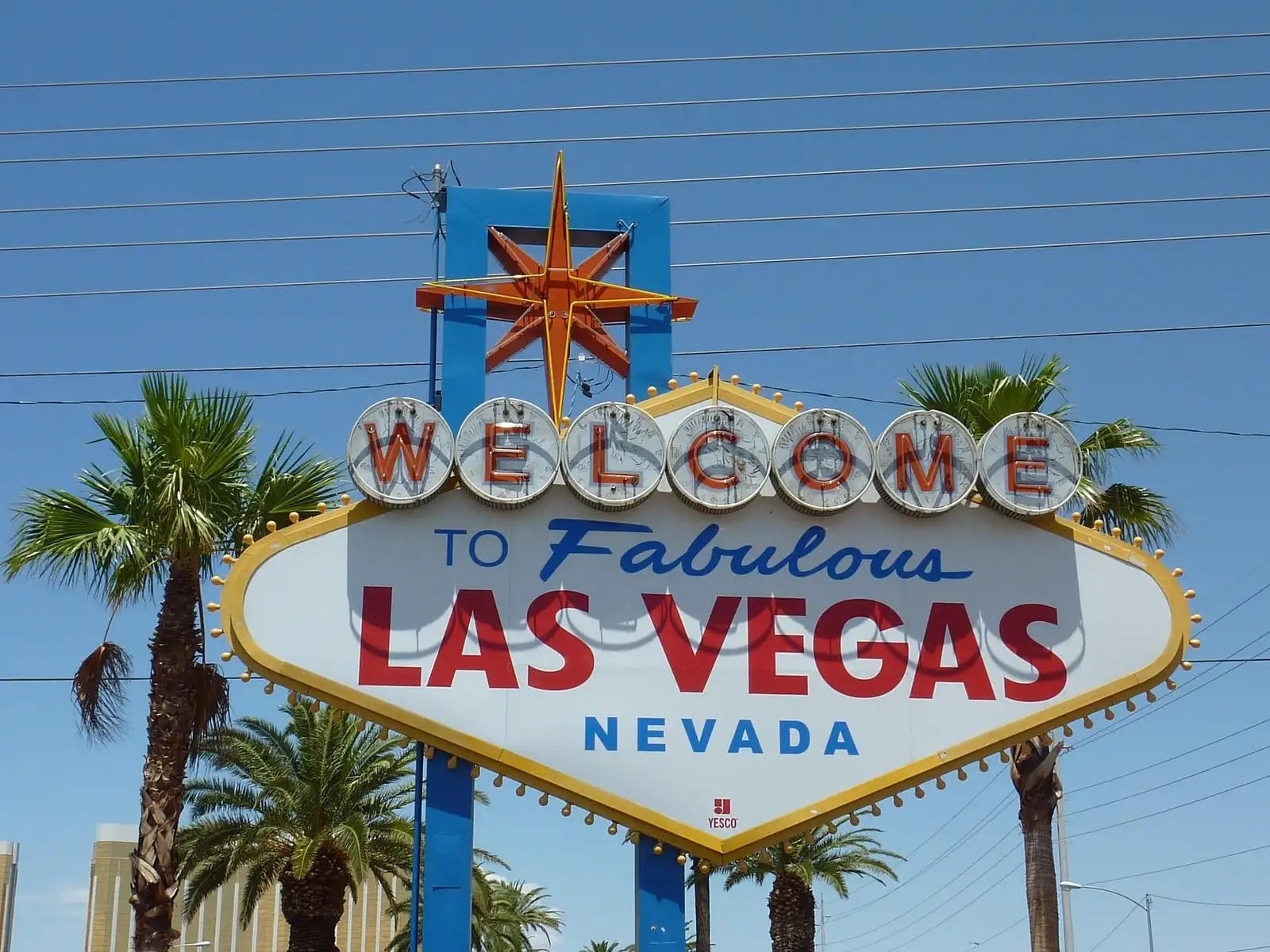
Las Vegas · Clark County
How to buy crypto in Las Vegas, Nevada
Las Vegas has more ways to convert cash into crypto than anywhere else between Phoenix and the Bay Area, and the widest gap between the best and worst of them. Choosing badly here costs about sixteen cents on the dollar; choosing well costs a fraction of one.
Las Vegas at a glance
Partner link. Digital assets are volatile and are not FDIC-insured.
The Las Vegas landscape
A city built on cash produces an unusual crypto market. Roughly 150,000 people in the Las Vegas Valley work in hospitality, a large share of them earning tipped income that arrives in paper form. Add a tourist float of forty million annual visitors, a significant unbanked and underbanked population, and shift patterns that put people off work at three in the morning, and you get precisely the conditions that made this one of the densest crypto-kiosk markets in the western United States.
That density is not evenly spread, and understanding where it clusters tells you something real about the city. Machines follow Boulder Highway, East Charleston, Craig Road and Las Vegas Boulevard North — corridors with high cash circulation and thin bank branch coverage. They are almost entirely absent from Summerlin, Enterprise and the master-planned parts of Henderson, where household incomes are higher and everybody has a checking account.
Alongside that physical layer sits the online one, which is where most of the actual volume happens. Every major licensed exchange serves Nevada, the state has no crypto-specific consumer restriction, and there is no state income tax waiting on the other side of a profitable trade. For anyone in Las Vegas with a bank account, the practical answer to "where do I buy crypto" is: on your phone, for almost nothing.
The last layer is the one nobody sees. Above roughly $50,000, trades move over the counter — a desk quotes a single all-in price and settles by wire. Las Vegas generates plenty of that demand from gaming, real estate and business exits. It hosts almost no dedicated physical crypto OTC offices, which is a genuine and slightly surprising gap.
Buying online: what Las Vegas residents should actually use
Nothing about being in Las Vegas changes which exchange is good. What changes is the availability of the cash alternative, which makes the comparison unusually stark here.
The pattern that saves the most money has nothing to do with brand choice. Every major US platform runs two storefronts: a consumer widget with heavy pricing and a professional order book with light pricing. Coinbase's simple buy can reach 3.99% while Coinbase Advanced charges 0.60%. Kraken's widget costs roughly 1.5% while Kraken Pro starts at 0.26%. Gemini's retail tab charges 1.49% plus a convenience fee while ActiveTrader charges 0.40%. Finding the professional tab is worth more than choosing between the companies.
On licensing, Nevada is straightforward. Money transmission is regulated by the Financial Institutions Division under NRS Chapter 671, and every platform in our comparison operates here under state licensing. CEX.IO publishes Nevada licence MT11107 on its US legal page, which you can verify at NMLS Consumer Access. Building the habit of checking the register rather than trusting the badge is worth doing once.
One Las Vegas-specific note on funding. Nevada banks and the larger credit unions handle ACH transfers to crypto platforms without drama. Smaller institutions occasionally place a fraud hold on a first transfer, which a phone call resolves. Do that call before you need the money to move rather than on the day you want to buy.
Buying with cash: the routes, honestly priced
Cash is the reason kiosks exist and the reason this city has so many. Four routes, in order of cost.
Deposit at your own bank, then fund an exchange. Costs essentially nothing. Takes one to five business days for the ACH to clear. This is the right answer for anyone with a bank account and no urgency, which describes most people most of the time.
Debit card on a licensed platform. Roughly 1.5% to 3%, settled in minutes. Around a fifth of kiosk pricing for the identical immediacy. If you need coins today, this is the sane version of that need.
Peer-to-peer. Cheap in theory, and genuinely useful for people without ID documents. Carries counterparty risk neither of the above has, and meeting a stranger with cash in a Las Vegas parking lot is a bad idea we would not recommend. See our P2P guide first.
A crypto kiosk. Roughly 16% all-in at the median, more in the resort corridor. Instant, requires no bank relationship, and available at hours nothing else is. Our Las Vegas kiosk guide maps the corridors and their price ranges.
A $500 conversion, four ways Bank route: about $2. Debit card: about $15. Kiosk: about $80. Same Bitcoin, same afternoon.
Compare live ratesBy neighbourhood: what is actually near you
The valley is not one market. Here is roughly how it breaks down.
Downtown and Fremont Street. A handful of machines, a tourist mix, and the two downtown casinos that accept crypto for non-gaming spending. Pricing is mid-range — better than the Strip, worse than the east valley.
Chinatown and the Spring Mountain corridor. Technically Spring Valley, and the busiest remittance area in the valley. Demand here skews towards stablecoins for cross-border transfers rather than Bitcoin accumulation, and machines often support more assets as a result.
East Charleston and the Boulder Highway spine. The densest kiosk cluster in Nevada, running into Sunrise Manor. Competition here produces the best kiosk pricing in the state, which still means paying eleven to sixteen percent.
Summerlin and the northwest. Almost no machines. Higher incomes, universal banking, chain-anchored retail that does not host kiosks. Residents here buy online in larger, less frequent amounts. See our Summerlin guide.
The southwest — Enterprise, Mountain's Edge, Southern Highlands. Nevada's largest unincorporated community by population and one of its thinnest for cash-to-crypto infrastructure. Covered in our Enterprise guide.

Crypto and the casinos: what actually works
This is the most common question we get from visitors, so let us be precise.
You cannot gamble with cryptocurrency in a Nevada casino. The Nevada Gaming Control Board has not approved crypto as a wagering medium. You cannot buy chips with it, you cannot fund a slot ticket with it, and no licensee is going to make an exception. Board officials have indicated that an operator wanting to do this would need to demonstrate how it would work and satisfy know-your-customer requirements — which is a long way from approval.
You can spend crypto at several properties for non-gaming purchases. The D Las Vegas and Golden Gate downtown, both operated by Derek Stevens, have accepted Bitcoin through a payment processor for hotel rooms, dining and gift-shop purchases. Resorts World has pursued crypto-friendly services allowing patrons to use a Gemini wallet for resort spending. In each case the property is settling in dollars behind the scenes; the processor handles the conversion.
Some properties host crypto kiosks. Convenient, and priced for a captive audience. Our guide to spending crypto in Las Vegas covers where acceptance genuinely works, including outside the resort corridor.
Large trades and the OTC gap
Above roughly $50,000, a public order book starts working against you: your own order moves the price and the slippage can exceed the fee several times over. An over-the-counter desk solves that by quoting a single all-in price for the whole block, typically at 0.1% to 0.5%, settled by wire.
Las Vegas generates real demand for this. What it does not have, as far as we can establish, is a meaningful number of dedicated physical crypto OTC offices. In practice large Nevada trades run through the institutional desks operated by the major exchanges — Kraken, Coinbase and others all run one — or through national brokers who complete onboarding by video call.
Expect proper diligence: identity documents, entity documents if you are trading through an LLC, and a source-of-funds conversation. That is the same Bank Secrecy Act framework that produces the ID scan at a kiosk, applied at a scale where a human is involved. Our Bitcoin OTC in Las Vegas page covers the local picture and the OTC guide covers the mechanics.
Cashing out in Las Vegas
Selling is harder than buying everywhere, and Las Vegas is no exception.
Two-way kiosks that dispense paper money are a minority of the valley's machines. Where they exist, sell spreads run 5% to 12%, daily caps are far lower than the buy side, and the machine's physical cash float is a real constraint — a kiosk that will take $10,000 from you may only be able to hand back $800.
For anything above a few hundred dollars, selling on a licensed exchange and withdrawing dollars to your Nevada bank is cheaper, faster in practice, and produces a record you will want at tax time. ACH is free and takes a couple of days; a domestic wire lands the same day for a flat fee. Full comparison in our guide to selling Bitcoin for cash in Nevada.
Tax and record-keeping from Clark County
Nevada takes nothing. The state constitution bars a personal income tax, which means no state capital gains tax on crypto disposals, no state tax on staking rewards, and no state tax on mining income. That is a substantial advantage over California, and it is one of the reasons a steady stream of people relocate here.
Federal treatment is unaffected. Disposals are taxable events, holding period determines whether long-term or short-term rates apply, and from the 2025 tax year brokers report digital asset dispositions to the IRS on Form 1099-DA. Export your transaction history quarterly rather than reconstructing it in April.
One trap specific to newcomers: if you moved to Nevada partway through a tax year, your former state may still claim gains realised while you were resident there. That is a conversation for a tax professional, and our Nevada crypto tax guide explains why it catches people.
Local scam patterns worth knowing
Las Vegas sees a disproportionate share of the fraud that drove $389 million in US crypto-kiosk losses in 2025, across 13,460 complaints to the FBI. Three patterns recur here.
Government impersonation. A caller claims to be from the IRS, Social Security, Metro or the Clark County courts. There is a warrant or an unpaid obligation, resolvable today by payment at a crypto machine while staying on the phone. No government agency accepts cryptocurrency. Ever.
Tech support and account-compromise scripts. Someone claiming to be from your bank or an exchange asks you to move funds to a "secure wallet" they provide. The address is theirs.
SIM-swap and social engineering. Las Vegas has been a focal point for sophisticated social-engineering attacks, including against large hospitality operators. The same techniques work on individual crypto accounts. Use an authenticator app rather than SMS for two-factor authentication.
Las Vegas crypto questions
What is the best way to buy crypto in Las Vegas?
Can I buy crypto with cash in Las Vegas?
Can I gamble with Bitcoin in Las Vegas casinos?
Is there a crypto OTC desk in Las Vegas?
Do I pay tax on crypto gains in Las Vegas?
Where can I sell Bitcoin for cash in Las Vegas?
Nearby guides
Coverage and pricing change quickly across Nevada. If you regularly travel between communities, these neighbouring guides are worth a look.
The cheapest route in Las Vegas is the same as everywhere in Nevada
A licensed platform funded from a bank account you already have, a spot order rather than an instant buy, and coins moved to a wallet you control. It costs a fraction of a percent and it works identically whether you are on the Strip or in the Great Basin.
Partner link. Digital assets are volatile and are not FDIC- or SIPC-insured. Nevada Crypto does not give investment advice.