Sunrise Manor · Clark County
How to buy crypto in Sunrise Manor, Nevada
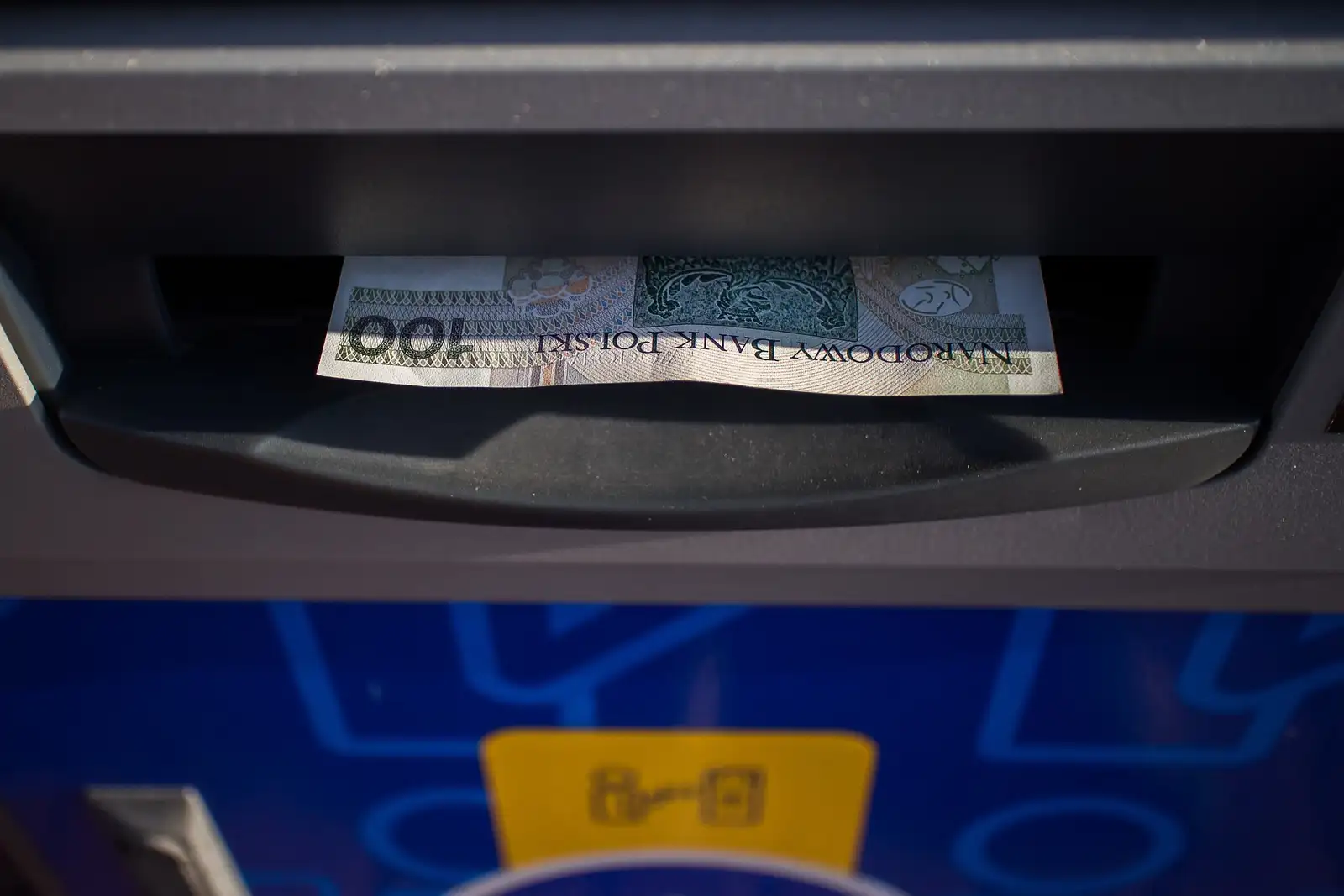
The stretch of Boulder Highway and Nellis Boulevard running through Sunrise Manor is one of the densest crypto-kiosk corridors in the western United States. It is also a near-perfect map of where cash circulates in this valley and where bank branches do not.
Sunrise Manor at a glance
Partner link. Digital assets are volatile and are not FDIC-insured.
The corridor
Boulder Highway is the old road to Boulder City and the Hoover Dam, and along the stretch running through Sunrise Manor it has become something else entirely: the densest concentration of crypto kiosks in Nevada, and one of the densest anywhere in the western United States.
Machines sit in liquor stores, smoke shops, convenience retail and check-cashing storefronts, in places three or four within a mile of each other. Nellis Boulevard running north-south carries a similar pattern. East Charleston picks up the western end. Together they form a grid of cash-to-crypto access unlike anything else in the state.
Sunrise Manor itself is an unincorporated town of roughly 215,000 people — bigger than Reno — stretching from the eastern edge of the city of Las Vegas out towards Sunrise Mountain and the Nellis Air Force Base perimeter. It is one of the most working-class and most cash-transacting parts of the valley.
Why the density is highest here
Three conditions have to overlap for a kiosk to be commercially viable, and this corridor has all three in unusual concentration.
Cash circulation. A large share of local employment is in hospitality, construction, landscaping, cleaning and food service — sectors where tipped and cash-paid income remains normal. Clark County's tipped workforce is enormous by national standards.
Thin banking coverage. Bank branch density along Boulder Highway is substantially lower than in the master-planned parts of the valley. Where branches are scarce, check-cashing and alternative financial services fill the gap — and those are exactly the businesses that host crypto machines.
Hours. A significant share of the local workforce is off shift when banks are closed. A 24-hour convenience store with a machine in it is available; a branch is not.
We want to be clear that this is not a story about people making bad choices. Given those three conditions, using a kiosk is a rational response. The problem is that the response is priced at roughly sixteen cents on the dollar, and there is a cheaper response available to more people than currently use it.
What it costs, and what it should
Kiosk pricing has two layers: a transaction fee shown on screen, typically 8% to 20%, and a markup embedded in the quoted exchange rate that is never labelled as a fee. Combined, machines in this corridor generally land at 11% to 16% all-in. Density brings a little competition, so pricing here is marginally better than the valley average — the national median, per the Federal Reserve Bank of Kansas City, is roughly 16%.
| Route | $100 | $300 | $500 | $1,500 |
|---|---|---|---|---|
| Corridor kiosk (≈14%) | $14 | $42 | $70 | $210 |
| Debit card, licensed app | $3 | $9 | $15 | $45 |
| Bank deposit + spot order | $0.40 | $1.20 | $2 | $6 |
At $100 the difference is a sandwich and genuinely does not matter. At $500 weekly — which is a realistic pattern for someone converting tips — the annual difference between the top row and the bottom row is roughly $3,500. That is the number worth sitting with.
$3,500 a year on a weekly habit Same Bitcoin. Same week. The only difference is whether the cash went through a bank first.
Set up an accountShift work and hours
The most common reason we hear for using a machine is timing: the money is in hand at midnight and the bank opens at nine.
That was a real constraint fifteen years ago. It is not one now, and the reframe is worth stating plainly: a licensed exchange app is open at midnight too. The machine's genuine advantage is that it accepts physical notes — not that it stays open.
Which means the question becomes: can you get the cash into an account? Most Nevada banks and credit unions have deposit-capable ATMs available around the clock, and several have branches with extended Saturday hours. Depositing at 11pm and buying at 11:05pm from the parking lot costs a few dollars. Feeding the same notes into a machine in the same shopping centre costs seventy.
The cheaper route, step by step
Deposit the cash where you bank
A branch, or a deposit-capable ATM. If you do not have an account, see the next section — this is the step worth solving.
Open a licensed exchange account
Every major US platform serves Nevada. Pick one with a low minimum so your first test purchase can be $20. Our comparison ranks ten.
Link the account by ACH
Free. Funds carry a hold of one to five business days before withdrawal, though you can usually trade immediately.
Buy on the professional tab
Not the big consumer button — that costs four to six times as much on every major platform. This one habit is worth more than switching brands.
Test a withdrawal early
Send $20 to a wallet you control in your first week. If a platform will not let you, you have learned something crucial while it is cheap.
If you have no bank account
This is the genuine kiosk use case, and it describes a real and significant share of this corridor.
The single highest-return financial step available to you is not choosing a better machine — it is opening a low-minimum credit union account. Several Nevada credit unions offer products with no minimum balance, no monthly fee with direct deposit, and second-chance accounts for people with a troubled banking history. That one change converts every future crypto purchase from a 14% transaction into a 0.3% one, and it does a great deal else besides.
In the meantime, use kiosks as well as they can be used. Compare the on-screen quote against a live market price before inserting cash — the gap between the machine's rate and the real rate is the hidden half of the fee. Choose a machine with competitors nearby rather than an isolated one. Bring your own wallet address rather than accepting a machine-printed paper wallet. Our walkthrough covers each step, and our cash guide covers routes that work without a traditional bank.
The corridor's fraud problem
High kiosk density plus heavy cash use puts this corridor directly in the path of the fraud that produced $389 million in US crypto-kiosk losses during 2025, across 13,460 complaints to the FBI's Internet Crime Complaint Center.
The dominant local pattern is government impersonation. A caller claiming to be from Social Security, the IRS, an immigration authority or a sheriff's office says there is a warrant, a debt or a status problem, resolvable today by payment at a crypto machine — and stays on the phone throughout. Spanish-language variants are common here.
The rule is unconditional: no government agency in the United States accepts payment in cryptocurrency. Not the IRS, not Social Security, not USCIS, not Metro, not a court. There are no exceptions and no special programmes.
Tax position
Nevada charges no personal income tax, so there is no state tax on crypto gains for Sunrise Manor residents, and Clark County adds nothing.
Federal tax applies normally. A kiosk purchase establishes a cost basis — keep the receipt, because you will need the date and dollar amount when you eventually sell. From the 2025 tax year brokers report dispositions to the IRS on Form 1099-DA, though a kiosk purchase itself is not a disposal. Our Nevada crypto tax guide covers what to keep and why.
Sunrise Manor crypto questions
Where are the Bitcoin ATMs in Sunrise Manor?
Why does Sunrise Manor have so many crypto kiosks?
What is the cheapest way to convert cash to crypto here?
Is Sunrise Manor part of Las Vegas?
How do I avoid being scammed at a kiosk on Boulder Highway?
Nearby guides
Coverage and pricing change quickly across Nevada. If you regularly travel between communities, these neighbouring guides are worth a look.
The cheapest route in Sunrise Manor is the same as everywhere in Nevada
A licensed platform funded from a bank account you already have, a spot order rather than an instant buy, and coins moved to a wallet you control. It costs a fraction of a percent and it works identically whether you are on the Strip or in the Great Basin.
Partner link. Digital assets are volatile and are not FDIC- or SIPC-insured. Nevada Crypto does not give investment advice.