
Paradise · Clark County
How to buy crypto in Paradise, Nevada
Paradise is where most of the Las Vegas Strip actually sits, along with the airport and UNLV. It is also home to the most expensive crypto in Nevada — a captive tourist market priced exactly the way you would expect a captive tourist market to be priced.
Paradise at a glance
Partner link. Digital assets are volatile and are not FDIC-insured.
What Paradise actually is
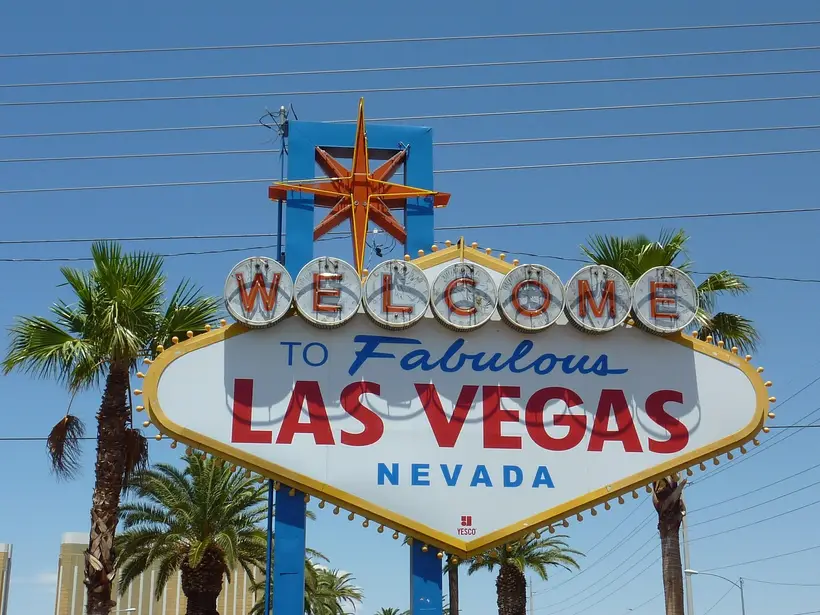
One of the more persistent confusions about Las Vegas is that most of the Las Vegas Strip is not in Las Vegas. The resort corridor sits largely in Paradise and Winchester — unincorporated towns in Clark County that were never annexed by the city, for reasons of tax base and gaming licensing that date back decades.
Paradise has roughly 190,000 residents. It contains most of the Strip, Harry Reid International Airport, the University of Nevada, Las Vegas, the convention district and the Paradise Road corridor. It is simultaneously one of the most visited places on earth and an ordinary residential community where people raise families a mile from the casinos.
That duality runs through everything on this page. The crypto infrastructure here serves two completely different populations with completely different needs, and confusing the two is how visitors end up paying a quarter of their money to a machine.
The resort-corridor premium
Crypto kiosks in and around the resort corridor carry the highest markups we have observed anywhere in Nevada — commonly 18% to 25% all-in once the displayed transaction fee and the exchange-rate markup are combined. The national median, per the Federal Reserve Bank of Kansas City, is roughly 16%.
There is nothing mysterious about why. The customer is a visitor who will not comparison shop, is often in a hurry, may not know what the market price is, and has no alternative within walking distance. Every market with those characteristics prices the same way, from airport currency booths to hotel minibars.
| Route | Cost | Time | You keep |
|---|---|---|---|
| Resort-corridor kiosk | ≈$220 | 10 min | ≈$780 |
| Kiosk a few blocks east | ≈$150 | 30 min | ≈$850 |
| Debit card, licensed app | ≈$30 | 5 min | ≈$970 |
| Bank transfer + spot order | ≈$4 | 1–3 days | ≈$996 |
Note the third row against the first. A licensed exchange app on your phone, funded by the debit card already in your wallet, is faster than walking to a machine and costs roughly a seventh as much. There is no scenario in which the resort kiosk is the right choice for somebody who has a bank card.
Five minutes from a hotel room A licensed platform works from anywhere, takes the card you already have, and shows you the all-in price before you confirm.
Check today’s rateCrypto and the gaming floor
The most common question we receive from visitors, so let us settle it clearly.
You cannot gamble with cryptocurrency in Nevada. The Nevada Gaming Control Board has not approved crypto as a wagering medium. You cannot buy chips with Bitcoin, you cannot load a slot ticket with it, and no licensee will make an exception — the licensing stakes for a Nevada casino are far too high to improvise around a regulator.
Board officials have indicated that an operator wishing to introduce crypto would need to demonstrate how it would work and how know-your-customer obligations would be satisfied. That is a long way from approval, and nothing in the current framework suggests it is imminent.
Casinos are, of course, heavily regulated for anti-money-laundering purposes as financial institutions in their own right. An asset class built partly around pseudonymity sits awkwardly with a compliance regime built around knowing exactly who is at the table. That tension, more than technology, is the reason the answer has stayed no.
Where crypto is actually accepted
Several Las Vegas properties do accept cryptocurrency for non-gaming spending, settling in dollars through a payment processor behind the scenes.
The D Las Vegas and Golden Gate, both downtown and both operated by Derek Stevens, have accepted Bitcoin through a payment system for hotel reservations, dining, front desk charges and gift shop purchases. These were among the earliest casino crypto adopters anywhere.
Resorts World Las Vegas has pursued crypto-friendly services, including arrangements allowing patrons to use a Gemini wallet for resort spending. Again: retail and hospitality, not gaming.
Beyond the resorts, acceptance across the valley is patchy and skews towards independent businesses — some restaurants, some services, some retail. Our guide to spending crypto in Las Vegas covers where it genuinely works, and the practical mechanics of paying.
For visitors
Three practical points if you are here for a few days.
Use an app, not a machine. Licensed exchanges serve visitors exactly as they serve residents. Verification uses whatever government ID you already carry. A debit card purchase settles in minutes at roughly 2% to 3%.
If you must use cash, walk east. Maryland Parkway, Paradise Road and the neighbourhoods around UNLV have machines that price materially better than the resort corridor. Ten minutes of travel is worth roughly seventy dollars on a thousand-dollar conversion.
Do not use a hotel-room Wi-Fi network for anything sensitive without care. Use your own cellular connection or a VPN for exchange logins, and use an authenticator app rather than SMS for two-factor authentication. Las Vegas has been a focal point for sophisticated social-engineering and SIM-swap attacks, including against large hospitality operators.
For residents
Paradise residents have the same options as everyone else in the valley and one specific advantage: they are not the captive market the corridor pricing is designed for.
The practical route is unremarkable and cheap. Link a Nevada bank or credit union to a licensed exchange, buy on the professional tab rather than the consumer widget, and move long-term holdings to a wallet you control. Cost under half a percent. Our Nevada exchange comparison covers the platform choice.
For anyone working in hospitality on the corridor — which is a large share of the local workforce — the tip-conversion question is the same one that drives kiosk use in Sunrise Manor, and so is the answer: get the cash into an account first, and the fee problem disappears.
UNLV and the student corridor
The Maryland Parkway corridor around UNLV has a distinct profile: young, mobile-first, price-sensitive, and buying in small amounts.
Two things matter for that group. First, minimum purchase sizes — several licensed platforms accept $1 to $20 starter buys, which makes it possible to learn the mechanics without meaningful risk. Second, fee percentages hurt disproportionately at small sizes, so the consumer-widget versus professional-tab distinction matters more here than anywhere.
A word of caution aimed squarely at this demographic: campus-adjacent crypto promotion is heavily targeted, and the FBI logged $11.4 billion in US crypto fraud losses across 181,565 complaints in 2025. If somebody in a group chat is offering guaranteed returns, it is not a guaranteed return. Our scam guide covers the patterns.
Tourist-specific risks
Two things that happen here more than elsewhere.
Pressure purchases. Somebody in a bar, a club or a hotel lobby who becomes very interested in your crypto holdings is not making conversation. Do not discuss balances, do not open a wallet app in front of strangers, and treat unsolicited investment introductions as what they are.
Device compromise. Public charging points, shared networks and unattended devices are all vectors. Carry your own charger, use cellular data for anything financial, and lock your phone.
Paradise crypto questions
Can I buy crypto on the Las Vegas Strip?
Can I gamble with Bitcoin in Las Vegas?
Is the Las Vegas Strip in the city of Las Vegas?
Where do visitors get the best crypto rate in Las Vegas?
Are there crypto ATMs at Harry Reid International Airport?
Nearby guides
Coverage and pricing change quickly across Nevada. If you regularly travel between communities, these neighbouring guides are worth a look.
The cheapest route in Paradise is the same as everywhere in Nevada
A licensed platform funded from a bank account you already have, a spot order rather than an instant buy, and coins moved to a wallet you control. It costs a fraction of a percent and it works identically whether you are on the Strip or in the Great Basin.
Partner link. Digital assets are volatile and are not FDIC- or SIPC-insured. Nevada Crypto does not give investment advice.