Safety
Crypto kiosk scams in Nevada: the scripts and the red flags
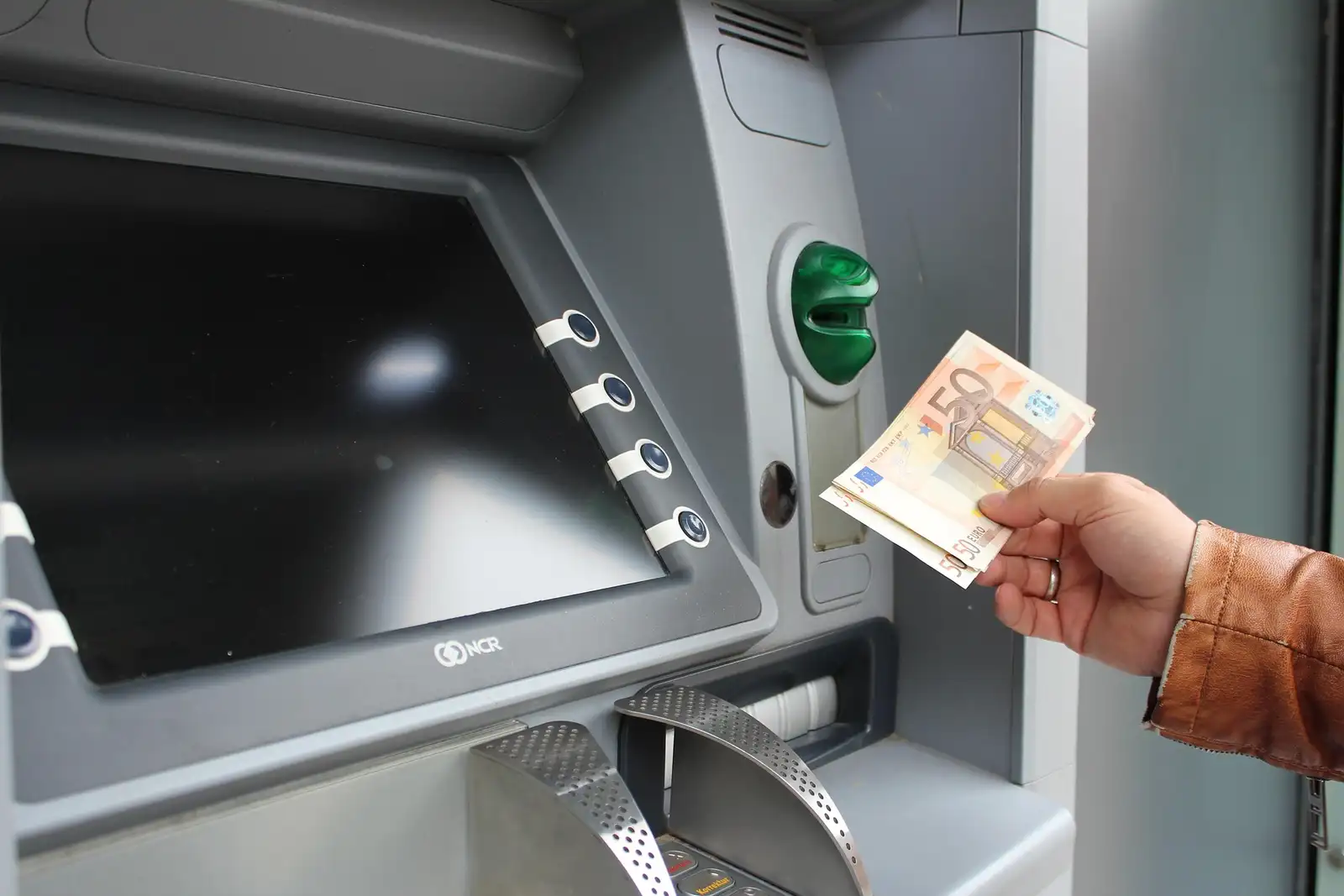
Crypto ATM fraud is the fastest-growing category in the FBI's complaint data, and Nevada is structurally exposed — high kiosk density in cash-heavy corridors, large retiree communities, and no state statute requiring warnings or refunds. This page is written to be forwarded to someone.
The scale of the problem
In 2025 the FBI's Internet Crime Complaint Center received 13,460 complaints involving cryptocurrency kiosks, with reported losses of roughly $389 million. That is a 58% increase in losses over the previous year and a 23% increase in complaint volume. Crypto-linked fraud overall reached $11.4 billion across 181,565 complaints, up 22% year on year.
The age distribution is the part that should worry anyone with an older parent. Adults over 60 accounted for roughly $257 million of kiosk-related losses across about 6,188 complaints, and led every age group in this category. Across all crypto fraud, over-60s lost around $4.4 billion — close to 40% of the national total.
These are reported figures. The real numbers are higher, because a substantial share of victims never report — often out of embarrassment, sometimes because they do not know where to report, and sometimes because a family member handles it quietly.
Why Nevada is structurally exposed
Four things line up badly here.
Kiosk density in the wrong places. Machines cluster along Boulder Highway, Nellis Boulevard, Craig Road and Las Vegas Boulevard North — corridors with high cash usage and comparatively thin banking infrastructure. Those are also the corridors where a scam victim is least likely to have a bank teller intervene.
Large retiree communities. Sun City Summerlin, Sun City Anthem in Henderson, Sun City Mesquite, and the Carson Valley towns around Gardnerville and Minden all have concentrated over-60 populations. That is precisely the demographic the FBI data identifies as most heavily targeted.
A transient population. Nevada has one of the highest in-migration rates in the country. New arrivals have weaker local support networks, unfamiliar institutions, and no long relationship with a bank branch where somebody would notice unusual behaviour.
No kiosk-specific state law. Nevada licenses operators as money transmitters and stops there. Other states have imposed daily caps for new customers, mandatory on-screen scam warnings, statutory refund rights and fee ceilings. Nevada has debated it — consumer groups including AARP have pressed for it — but nothing has passed.
The five scripts that account for most of it
1. Government impersonation
A caller identifies themselves as the IRS, Social Security Administration, a local sheriff's office, or occasionally US Marshals. There is a warrant, an unpaid tax bill, a compromised social security number, or a missed jury summons. The problem can be resolved today by paying — and payment must be made in cryptocurrency, at a machine, right now, while staying on the phone.
No government agency in the United States accepts payment in cryptocurrency. Not one. There are no exceptions, no special programmes, and no circumstances in which this is real.
2. Tech support fraud
A pop-up or a phone call warns that your computer is infected or your bank account has been accessed. A "technician" takes remote control, shows you alarming-looking output, and explains that your funds must be moved to a secure wallet while the problem is fixed. They stay on the line and direct you to a kiosk.
3. The "secure your account" script
A variant aimed at people who already hold crypto. Someone claiming to be from an exchange's fraud team calls about suspicious activity and asks you to move your balance to a "secure wallet" they will provide. The address they give you is theirs. No exchange will ever do this.
4. Romance and long-con investment fraud
Weeks or months of relationship-building, then an investment opportunity — often a convincing-looking trading platform showing your balance growing. Deposits are made via kiosk. Withdrawals require a "tax payment" or "unlocking fee" that never ends.
5. Fake job and overpayment schemes
A remote job that involves receiving funds and forwarding a portion in crypto. The incoming payment is fraudulent and eventually reverses; the crypto you forwarded does not.
The red flags that appear in every one
Always a scam
- Payment demanded in cryptocurrency by any agency or company
- A QR code sent to you by text, email or WhatsApp
- Instructions to stay on the phone while at the machine
- Urgency: today, within the hour, before the office closes
- Secrecy: do not tell your family, do not tell the cashier
- Instructions to split the amount across multiple machines
What legitimate use looks like
- You decided to buy crypto, on your own, days ago
- You are sending to an address in a wallet you set up
- Nobody is on the phone with you
- You could walk away right now with no consequence
- You checked the quote against a market price first
- You would happily tell your family about it afterwards
The QR code point deserves emphasis because it is the technical heart of the fraud. A QR code is just a wallet address in visual form. When a scammer sends you one, they are sending you their address, and every dollar you convert lands with them instantly and irreversibly. A legitimate purchase always uses a code generated by your own wallet, on your own phone.
If you are buying crypto because you want to Do it on a regulated platform with account recovery, transaction review and support you can escalate to. None of those exist at a kiosk.
Open an accountProtecting an older relative in Nevada
This is the section worth forwarding. The FBI data is unambiguous that over-60s bear the heaviest losses, and the interventions that work are simple and social rather than technical.
Have the conversation before anything happens
Not a warning — a story. "Someone in Sun City lost $40,000 to a caller pretending to be from Social Security" lands better than a list of rules, and it is true across every retirement community in this state.
Establish a single rule they will actually remember
"Nobody real will ever ask you to pay with Bitcoin." One sentence, no nuance, no exceptions. Complexity is what scammers exploit.
Agree a call-first person
Any request for money, from anyone, triggers a call to one named family member before anything is done. Scammers work by isolating people; a mandatory second opinion breaks the script.
Explain that hanging up is always allowed
Many victims describe feeling unable to end the call. Give explicit permission to hang up on anyone, for any reason, including someone claiming to be a police officer.
Talk to their bank
Nevada banks and credit unions can flag unusual withdrawal patterns. A conversation with a branch manager about a parent's account is a legitimate and often effective step.
If it has already happened
Speed is the only variable you control, and the window is measured in hours rather than days. Operators occasionally freeze funds that have not yet been swept from a machine's hot wallet. That is uncommon, but it is not impossible, and it becomes impossible quickly.
| Who | Why | When |
|---|---|---|
| The kiosk operator | Only party who could conceivably freeze funds not yet swept | Immediately — call, do not email |
| FBI IC3 | Federal complaint record; feeds investigations and the annual data | Same day |
| FTC | Consumer protection enforcement and pattern tracking | Same day |
| Nevada Attorney General | State consumer protection; multistate actions have followed kiosk complaints | Within days |
| Local police | Creates a report number you will need for other filings | Within days |
| Nevada FID | If the operator appears to be unlicensed | Anytime |
Keep everything: the printed receipt, the transaction ID, the phone number that called you, any text messages, the QR code image if you still have it. Those details are what turn a complaint into a case.
The second wave: recovery scams
Within days of a loss, many victims receive contact from someone offering to recover the stolen crypto — a "blockchain forensics specialist", a law firm, occasionally someone claiming to be from a government task force. They know details about the original fraud, which is persuasive and is usually because they bought the victim list.
No legitimate service can reverse a blockchain transaction. Recovery is possible only through law enforcement action against the people holding the funds, and that process never begins with an unsolicited phone call asking for an upfront fee.
Treat any unsolicited recovery offer as a second attempt on your money, because it is one. Our page on crypto recovery scams in Nevada covers the pattern in detail.
What Nevada law does not currently do
Nevada regulates kiosk operators through money transmitter licensing under NRS Chapter 671, administered by the Financial Institutions Division, with a surety bond starting at $10,000. That is a real requirement and the state has pursued unlicensed operators.
What it does not do is impose the consumer protections that a number of other states enacted in 2024 and 2025: statutory daily transaction caps for new customers, mandatory on-screen scam warnings, a statutory right to a refund for fraud victims who report within a fixed window, and ceilings on operator fees.
AARP and other advocates have pressed Nevada lawmakers to act, arguing that Nevadans lose millions each year through largely unregulated kiosks. Reporting from Carson City indicates the topic has been raised repeatedly. As of our latest review, no kiosk-specific statute has been enacted.
Practically, that means the protections you have are the ones you bring yourself. Our Nevada kiosk regulation page tracks the position.
A regulated account is a safety feature
Exchanges have account recovery, two-factor authentication, transaction review, withdrawal address whitelisting, hold periods on new addresses and support you can escalate to. A kiosk transaction has none of that — it is cash in, coins gone, no recourse. If you are buying crypto deliberately, buy it somewhere with brakes.
Partner link. Digital assets are volatile and are not FDIC- or SIPC-insured. Nevada Crypto does not give investment advice.