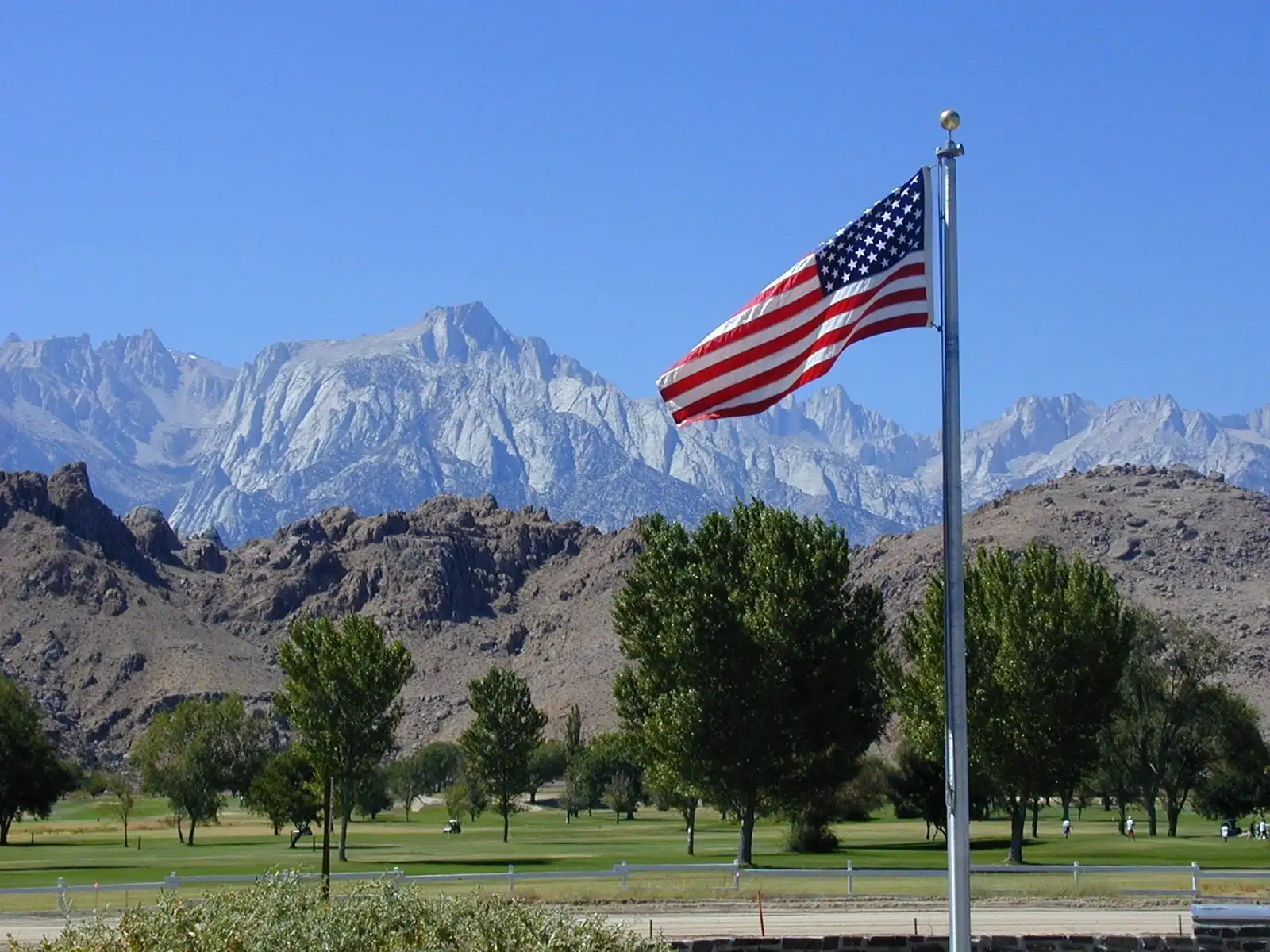
Nye County · seat Tonopah
Buying crypto in Nye County, Nevada
Nye County is the third-largest county in the lower forty-eight, roughly 18,000 square miles of desert and mountain running most of the length of the state. Around 54,000 people live in it. Its crypto infrastructure is exactly what that ratio suggests, and it matters far less than you would think.
The scale of the place
Nye County is difficult to grasp from a map. It runs roughly 200 miles north to south and covers around 18,000 square miles — bigger than Vermont, New Hampshire, Massachusetts and New Jersey combined, and the third-largest county in the contiguous United States.
Around 54,000 people live in all of that, which works out to about three per square mile. The great majority are in Pahrump, in the far south near the California line. The county seat, Tonopah, is 165 miles north and has a population in the low thousands.
The county also contains the Nevada National Security Site, large stretches of federal land, Death Valley's eastern approaches, and a scattering of small communities — Beatty, Amargosa Valley, Gabbs, Round Mountain — that are further from a bank branch than most Americans have ever been.
In a county like this, the phrase "local financial infrastructure" barely applies. Which turns out, for cryptocurrency specifically, to be a much smaller problem than it is for almost anything else.
Where people actually live
Pahrump — roughly 45,000 people, Nevada's largest unincorporated town, an hour west of Las Vegas over the Spring Mountains. Has bank and credit union branches and has had intermittent crypto kiosk coverage along Highway 160. This is where the overwhelming majority of the county's population and services are, and it has its own detailed guide.
Tonopah — the county seat, roughly halfway between Las Vegas and Reno on US-95, a historic mining town with a population in the low thousands. Limited banking, no dependable crypto kiosk.
Beatty, Amargosa Valley, Gabbs, Round Mountain, Manhattan — small communities with populations in the hundreds. No crypto infrastructure of any kind.
Financial infrastructure, honestly
Pahrump has branches. Tonopah has limited banking. Everywhere else is a drive.
On crypto kiosks: coverage in the county has always been marginal and became less reliable after May 2026, when Bitcoin Depot filed Chapter 11 and deactivated its entire fleet of more than 9,000 machines nationally. In dense corridors that removed redundancy; in a county like this it can remove the only machine, and aggregator maps kept listing dead locations for weeks.
Where a machine does operate, expect the upper end of the pricing range. An isolated kiosk with no competitor within sixty miles has no reason to price competitively, and the national median all-in cost is already roughly 16% per the Federal Reserve Bank of Kansas City.
The rule for anyone in this county: never drive to a machine you have not confirmed by phone. Operators publish support numbers. Ninety seconds of checking can save an hour of driving.
The rural playbook
Open an account with a low minimum
Being able to test the full flow for $20 matters more when the nearest alternative is fifty miles away. Our comparison ranks ten licensed platforms.
Do verification on the best connection you have
Document uploads and liveness checks are the heaviest part of the process. Do them somewhere with a stable link rather than on a marginal cellular signal.
Link a bank or credit union
ACH is free. Small institutions may place a fraud hold on a first crypto transfer — call the branch in advance, because in a small town that call actually works.
Test both directions before you rely on it
A small crypto withdrawal to your own wallet, and a small fiat withdrawal back to your bank. Discovering a hold when you urgently need funds is worse out here.
Distance stops mattering once the account exists A licensed exchange serves Tonopah identically to Las Vegas — same order book, same price, same regulatory framework.
Get startedPlanning around ACH and distance
Rural users get caught by timing more often than urban ones, and the reason is simple: there is no backup option nearby.
An ACH deposit typically takes one to five business days to clear for withdrawal, though most platforms let you trade immediately. If your plan involves getting coins into your own wallet quickly, that clearing period — not the trade — is the constraint.
For larger amounts a domestic wire settles the same day, and the flat fee becomes negligible as a percentage above roughly $25,000. Ask your branch about their wire cutoff; in a small branch it can be earlier than you expect.
The general principle for rural Nevada: set the rails up before you need them. A verified account, a linked and tested bank connection, and one completed transaction in each direction. That preparation turns an urgent problem into a two-minute task.
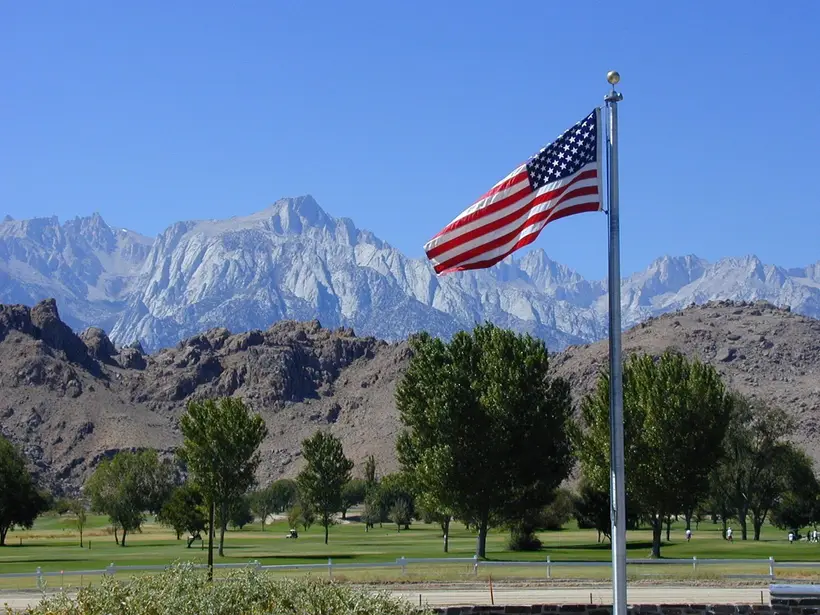
Mining and off-grid setups
Nye County attracts a certain kind of self-sufficiency — large lots, solar arrays, wells, generators — and occasionally that extends to running mining hardware.
Nevada has no law prohibiting cryptocurrency mining. The constraints here are physical.
Heat. Summer temperatures in the Pahrump Valley and Amargosa regularly exceed 110°F. Mining hardware produces substantial heat and needs cooling, and cooling in that climate is expensive enough to decide whether a setup is viable at all.
Power. Residential rates make most home mining marginal. A substantial solar array with battery capacity changes the arithmetic, and large lots make that more feasible here than in a city.
Connectivity. Satellite and fixed wireless are common in the outlying valleys. Buying crypto needs almost no bandwidth; mining needs uptime, and that is worth testing before buying hardware.
The tax treatment catches people: mined coins are ordinary income at the dollar value when received, with a separate capital gains calculation when sold. Our Nevada crypto mining guide covers the economics without the enthusiasm.
Isolation and fraud
Nye County's population skews older, particularly in Pahrump, and geographic isolation is an active risk factor rather than a neutral one.
Scams work by isolating the target — creating urgency, demanding secrecy, and preventing consultation with anyone who would object. Rural distance does part of that work for the scammer. Fewer nearby family members. A bank branch that may be a long drive. And an hour of driving to Las Vegas during which a caller can maintain pressure without interruption.
Adults over 60 reported roughly $257 million in US crypto-kiosk fraud losses during 2025, across about 6,188 complaints — the largest share of any age group. Total US crypto fraud losses hit $11.4 billion.
The rule that stops nearly all of it: no legitimate agency or company ever asks for payment in cryptocurrency. Not the IRS, not Social Security, not a sheriff's office, not a utility, not a court. Our kiosk safety page is written to be forwarded.
Tax position
Nevada's constitution bars a personal income tax, so Nye County residents pay no state tax on crypto capital gains, staking rewards or mining income. The county adds nothing, and state law restricts local governments from imposing blockchain-specific taxes or licences.
Federal tax applies in full, and from the 2025 tax year brokers report dispositions to the IRS on Form 1099-DA. Our Nevada crypto tax guide covers the detail, including the residency question for anyone who relocated here from California — which describes a large share of Pahrump.
Nye County questions
Is there anywhere to buy crypto with cash in Nye County?
How big is Nye County?
How do Tonopah residents buy crypto?
Can I mine crypto in Nye County?
Do Nye County residents pay state tax on crypto gains?
Eighteen thousand square miles, one account
Nye County's physical infrastructure will never match its geography. It does not have to. A licensed exchange account works identically from Pahrump, Tonopah or a ranch road with a satellite dish — same price, same protections, no drive.
Partner link. Digital assets are volatile and are not FDIC- or SIPC-insured. Nevada Crypto does not give investment advice.